The Real Cost of Employee Job-Hopping: Why Nigerian Companies Must Rethink Employee Welfare

Employee turnover is costing businesses millions of naira. It is one of the most expensive challenges facing corporate organisations. Beyond losing valuable talent, businesses must contend with recruitment costs, training expenses, reduced productivity and disruptions to operations.
In Nigeria, where rising living costs continue to affect household purchasing power, employee retention strategies need to go beyond salaries and traditional benefits.
According to the National Bureau of Statistics (NBS), Nigeria's food inflation reached 19.59% in September 2026. For employees managing transportation, accommodation, education and feeding expenses, this pressure can influence how they evaluate their compensation and employment opportunities.
The Hidden Financial Cost of Losing Employees
Research by Gallup suggests that replacing employees can cost organisations between 40% and 200% of annual salary, depending on the position.
To understand the financial implications, consider a Nigerian company with 200 employees earning an average monthly salary of ₦300,000.
A reduction in annual turnover from 20% to 15% would mean retaining 10 additional employees, potentially saving approximately ₦9 million annually in replacement-related costs.
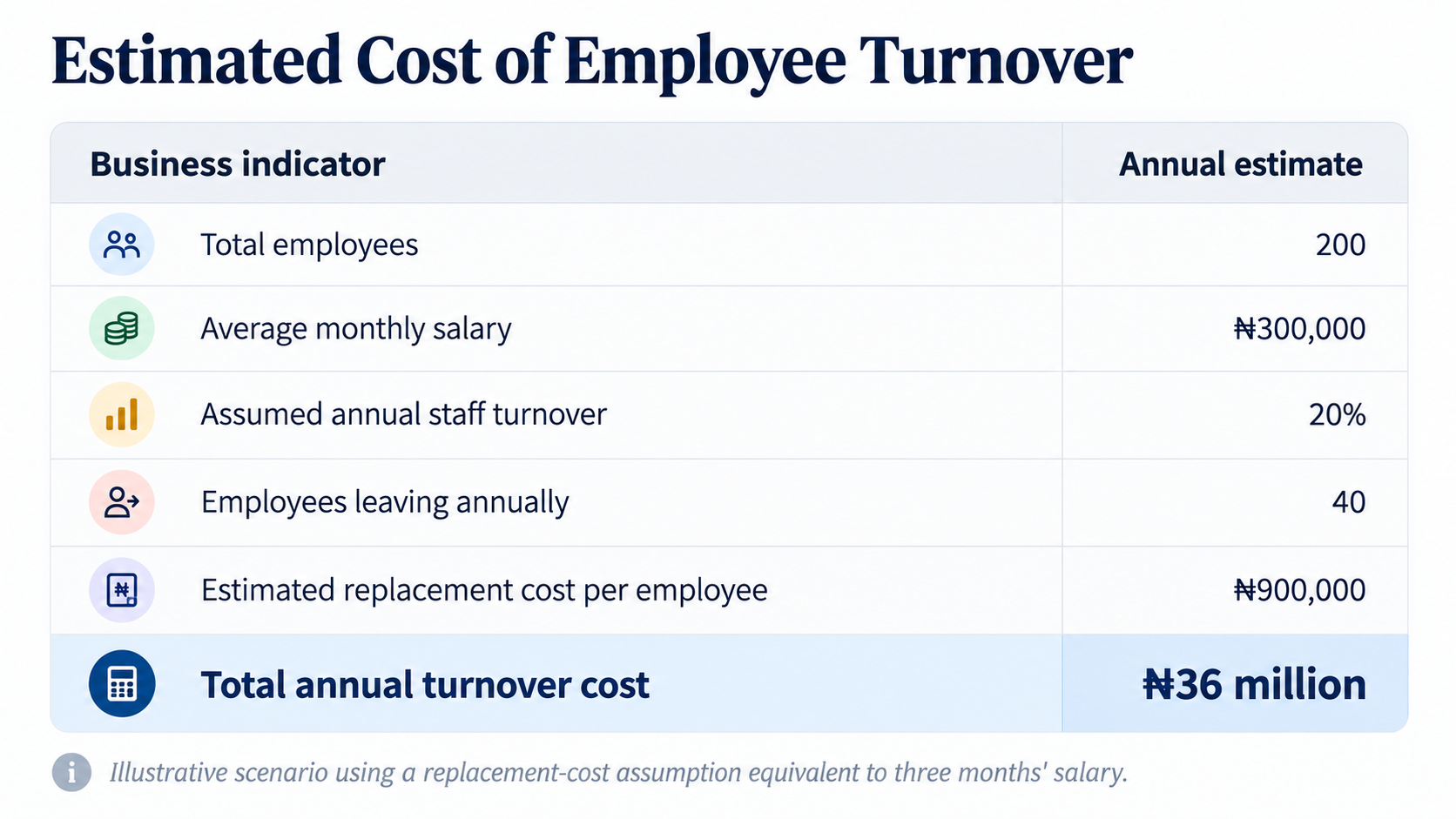
This illustrates why even modest improvements in employee retention deserve management attention.
Why Everyday Welfare Benefits Matter
Competitive salaries remain essential, but employees also value benefits that directly improve their daily lives.
One increasingly relevant area is food and household support.
Grocery assistance can help employees manage recurring expenses, ease financial pressure and increase the practical value of their employment package.
For example:
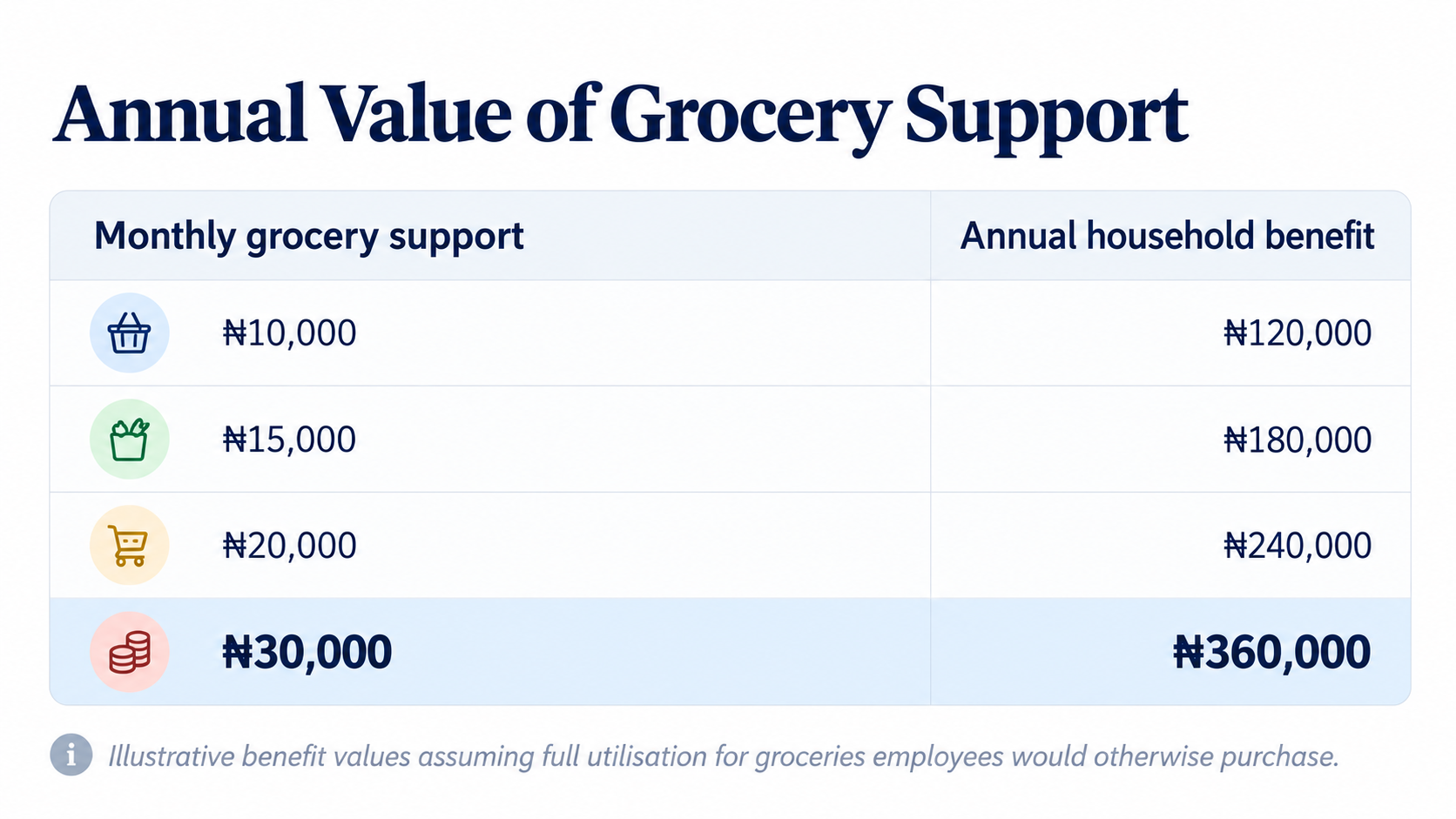
An employee receiving ₦20,000 monthly in grocery support potentially gains ₦240,000 in annual household purchasing value, without the organisation necessarily restructuring its entire salary framework.
While grocery support cannot replace competitive pay or career growth, it can strengthen employee satisfaction and contribute to a workplace culture that encourages loyalty.
Making Grocery Welfare Easier for Organisations
Traditionally, companies have supported employees through food hampers, festive packages and occasional distributions of essential commodities.
However, these programmes can create challenges involving procurement, packaging, storage and distribution. Employees may also have different household needs and preferences.
This is where flexible grocery voucher programmes become useful.
Rather than purchasing identical grocery items for everyone, organisations can allocate a defined grocery budget to employees, allowing them greater flexibility over their household essentials.

Soillight Grocery Vouchers offer an option for organisations exploring this approach to employee welfare.
Companies can incorporate grocery vouchers into monthly welfare programmes, staff recognition initiatives, festive benefits or employee appreciation schemes, making everyday support a more intentional part of their overall benefits strategy.
The Business Case for Consistent Employee Support
A good employee welfare programme should be evaluated through more than the number of benefits distributed.
HR and finance teams should monitor staff turnover, employee satisfaction, benefit utilisation and the cost of replacing departing employees.
Although no specific reduction in job-hopping can be guaranteed from grocery assistance alone, the potential benefits of a more engaged and financially supported workforce make it worth evaluating.
Conclusion:
Employee retention is not always about offering the highest salary. It is also about creating an environment where employees feel understood, supported and valued.
For Nigerian corporate organisations, grocery welfare is one practical way to demonstrate that commitment.
Whether through traditional food packages or flexible solutions such as Soillight Grocery Vouchers, supporting employees with everyday essentials can form part of a broader strategy for building a loyal, productive and stable workforce.
Sometimes, the benefits employees appreciate most are the ones that make everyday life a little easier.
Comments (0)
No comments yet.