The Future of Nigeria's Local Markets in a Digital Economy
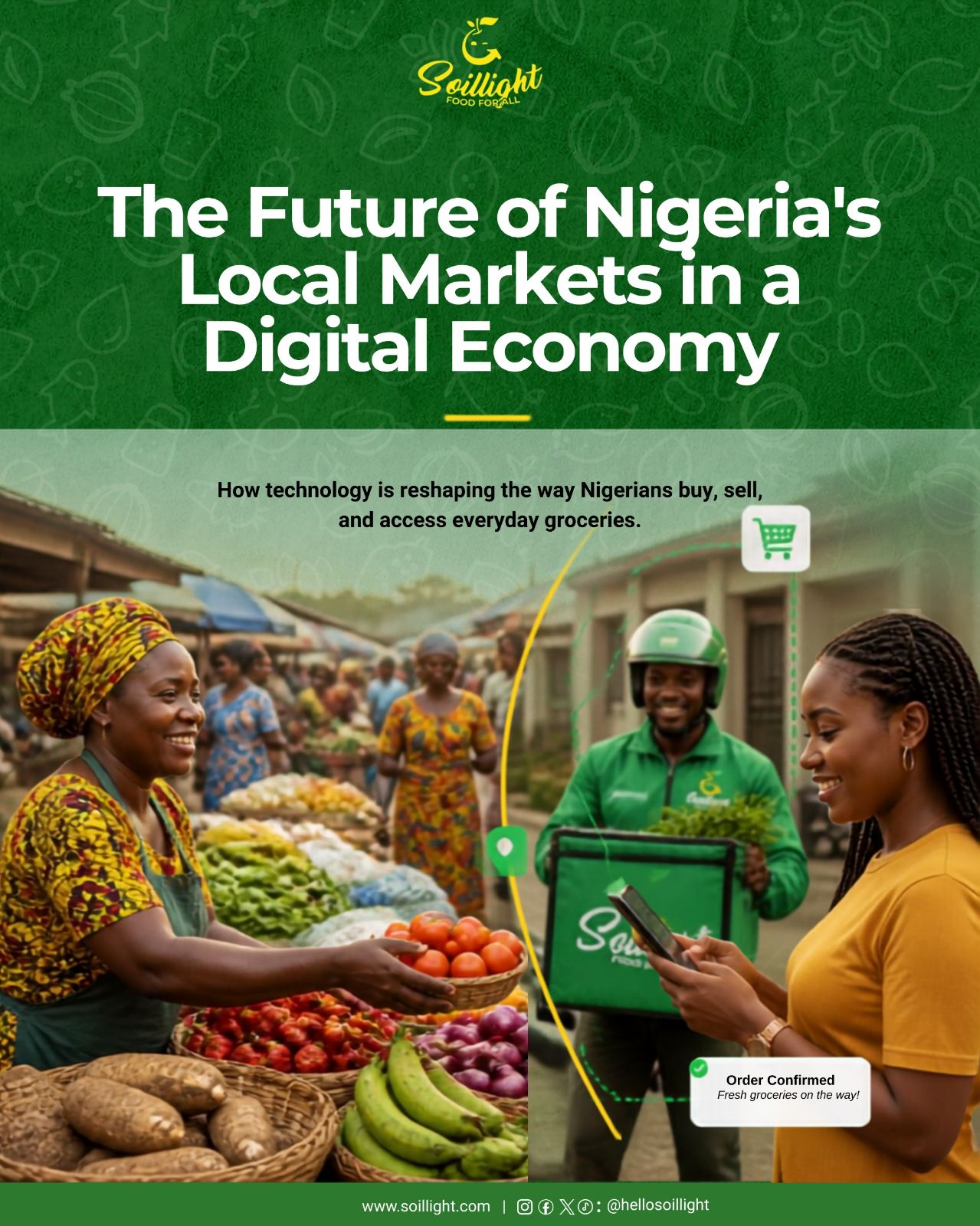
The Future of Nigeria's Local Markets in a Digital Economy
Nigeria's local markets have always been more than places to buy food; they're centers of community, culture, and commerce. As e-commerce grows across the country, a natural question arises: what happens to traditional markets in a digital-first future? The answer isn't replacement, it's evolution.
Nigeria's Digital Economy Is Growing Faster Than Almost Anywhere in Africa
Nigeria's e-commerce market is projected to grow from roughly $10.49 billion in 2026 to $18.68 billion by 2031, at a compound annual growth rate above 12%. Internet penetration has climbed past 100 million users, and mobile devices now account for the overwhelming majority of online activity in the country. This isn't a fringe trend, it's a structural shift in how Nigerians discover, evaluate, and buy things, including groceries. For local market sellers, this growth represents an enormous, largely untapped opportunity provided they have a way to plug into it.
Markets Aren't Disappearing — They're Expanding Digital platforms aren't designed to replace physical markets; they're designed to extend their reach. A trader who once served only walk-in customers can now reach buyers across an entire city, without giving up their physical stall. The stall remains the foundation; the digital layer simply removes the ceiling on how many customers that stall can serve.
Visibility Was Always the Biggest Barrier for Sellers
Many sellers offer excellent products but are limited by foot traffic alone. Digital marketplaces solve this by giving traders online visibility, meaning quality and reputation not just location, determine how much business they can do. A seller three streets back from the main market road can now compete on equal footing with one on the busiest corner.
Technology Strengthens the Local Food Supply Chain
When more customers order directly from local sellers, it creates steadier demand for traders, farmers, and suppliers throughout the food ecosystem. This matters enormously given the scale of Nigeria's post-harvest losses: the Ministry of Agriculture and Food Security estimates losses of 50–60% for tubers, fruits, and vegetables, and roughly N3.5 trillion annually across all food categories — a figure that exceeds Nigeria's entire five-year federal agriculture budget. Steadier, more predictable demand through digital channels can help reduce the overproduction-and-spoilage cycle that drives much of this loss.
Digital Trust Is the New Market Reputation
In physical markets, trust is built through years of face-to-face relationships. Online, that trust is built through verified profiles, ratings, and consistent delivery quality, a digital version of the same reputation traders have always relied on. This transition doesn't erase the relational trust that Nigerian markets are known for; it simply gives that trust a new, discoverable format.
Challenges Still Facing Nigeria's Digital Market Transformation
This shift isn't without real obstacles. Informal addressing systems and urban congestion inflate last-mile delivery costs in cities like Lagos by as much as 30%, according to industry estimates. Broadband and reliable connectivity also remain uneven outside major urban centers, which slows adoption in some regions. And for many older or less tech-familiar traders, the biggest barrier isn't willingness; it's simply not knowing where to start.
None of these challenges are unsolvable, but they explain why digital transformation is happening gradually, market by market and seller by seller, rather than overnight. Platforms that invest in onboarding support and simple, low-friction tools for sellers are the ones most likely to close this gap faster.
What This Means for Nigeria's Retail Future
The future of food retail in Nigeria is both local and digital. Traditional markets remain essential to the culture and economy, but technology is giving sellers new tools to compete, grow, and reach customers who may never have found their stall otherwise. Platforms that keep local sellers not anonymous warehouses at the center of the transaction are best positioned to lead this shift responsibly.
Key Takeaways
- Nigeria's e-commerce market is growing above 12% annually, creating a major growth opportunity for local sellers who go digital.
- Digital platforms extend market reach rather than replacing physical stalls; sellers keep their in-person business while adding online customers.
- Visibility, not just location, increasingly determines a seller's success once they're online.
- Nigeria's food supply chain loses an estimated ₦3.5 trillion annually to post-harvest waste; steadier digital demand can help reduce this.
- Online ratings and verified profiles are becoming the digital equivalent of the trust traditionally built face-to-face in markets.
- The future of Nigerian retail blends both worlds: local sellers, digital reach.
FREQUENTLY ASKED QUESTIONS
Will online grocery platforms replace physical markets in Nigeria? No — platforms like Soillight are built to extend market sellers' reach, not replace their physical presence.
How does digital commerce help local traders specifically? It increases visibility beyond foot traffic, helping sellers reach more customers and generate more consistent orders.
Why does this matter for Nigeria's economy? Stronger local sellers support farmers, suppliers, and surrounding small businesses contributing to broader economic growth.
Do sellers need technical skills to join an online marketplace? Most platforms are designed to be simple to use, requiring only a smartphone and basic familiarity with messaging or app-based ordering.
How is trust established for a seller who has no online history yet? New sellers typically build trust gradually through verified onboarding, early customer reviews, and consistent order fulfillment.
Does going digital change how much sellers earn per item? Not directly — sellers set their own prices; digital platforms primarily increase order volume by expanding their customer reach.
Is this shift unique to Nigeria, or happening across Africa? Similar trends are emerging across Sub-Saharan Africa, though Nigeria's large population and fast-growing e-commerce sector make it one of the continent's most significant markets for this shift.
Are you a local market seller?
Bring your stall online and reach customers across your city. Join Soillight as a seller.
Comments (0)
No comments yet.