Is Going to the Market Still a Necessity, or Just a Habit?
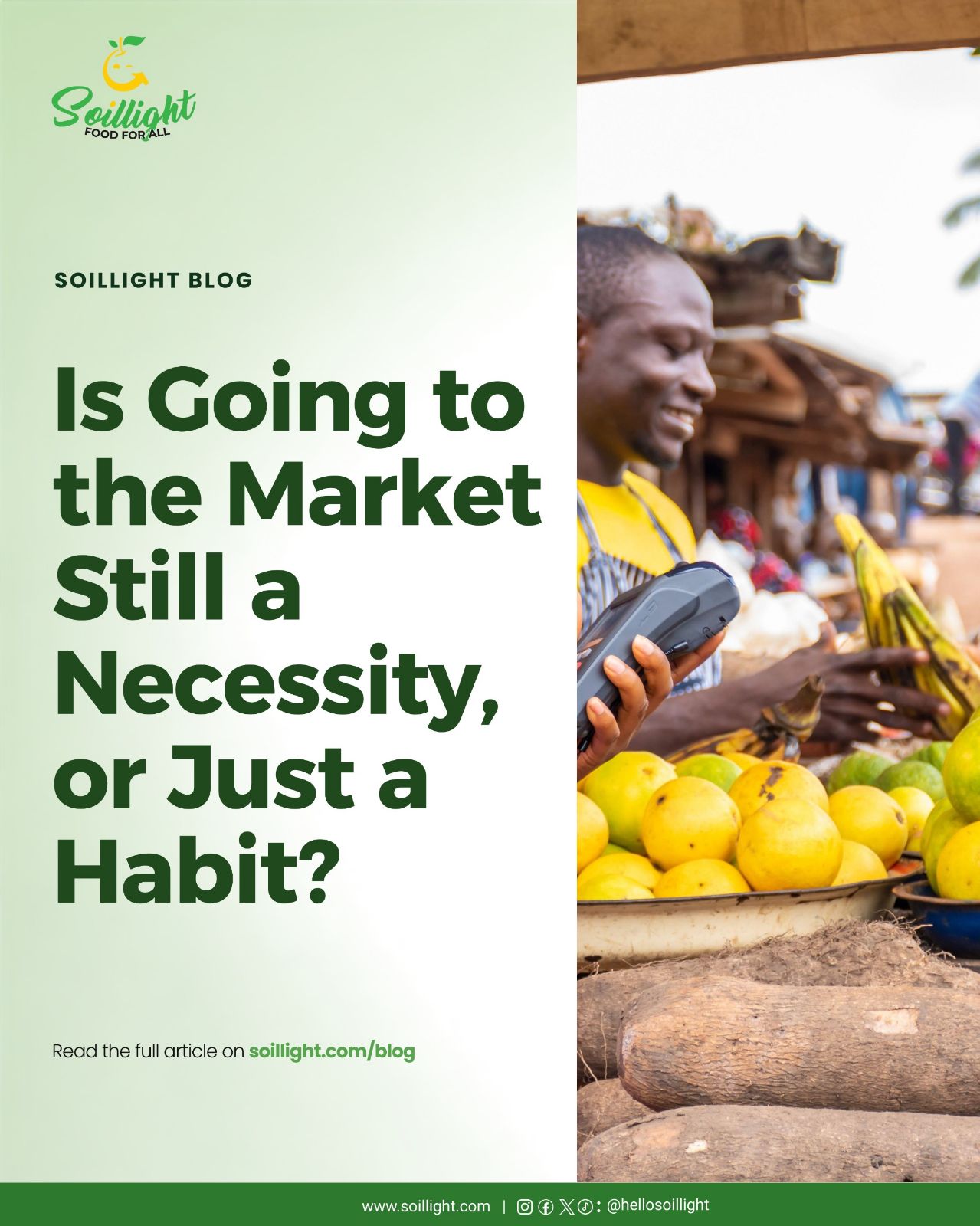
Is Going to the Market Still a Necessity, or Just a Habit?
There was a time when going to the market wasn't a choice, it was the only way to eat. If you needed pepper, you went to Mile 12. If you needed rice, you found a bag seller at Oyingbo or Ketu you trusted, and haggled until your voice went hoarse. The market was where the week began, whether you liked it or not.
That time hasn't fully passed. But it's quietly changing shape.
Today, a growing number of Nigerians still go to the market every week not because there's no other way to get groceries, but because it's what they've always done. It's muscle memory. It's tradition. For some, it's even therapy: the noise, the negotiation, the familiar faces at the same stalls. For others, it's an obligation they'd happily hand off if something better came along.
So which is it — necessity, or habit?
The honest answer is: it depends who you ask, and increasingly, it depends on what else is available to them. That's precisely why platforms like Soillight are emerging not because markets have failed, but because shoppers' expectations, schedules, and definitions of convenience have changed faster than the weekly market run has.
What's actually changed
Three things have quietly shifted the ground under the traditional market run:
1. Time has gotten more expensive.
Lagos traffic alone can turn a "quick market run" into a half-day event. Research from the Danne Institute puts the average Lagos commuter at roughly 2.21 hours in traffic every day and a Businessday analysis found commuters lose close to 30 hours a week to gridlock. For someone working a 9-to-6 with a Mile 12 or Bodija run bolted onto either end of the day, the market isn't just a stop; it's a tax on the only free hours they have.
2. Trust has started to travel.
For a long time, people insisted on physical markets because they didn't trust anyone else to pick their tomatoes or weigh their rice honestly. That trust is no longer exclusive to the market woman you've known for ten years at Ketu or Wuse, it's being rebuilt online, one good delivery at a time, especially where sellers show their faces and their stories rather than hiding behind a logo.
3. Convenience has become a value, not a luxury.
A decade ago, paying to have groceries delivered felt indulgent. Today, Nigeria's e-commerce market is projected to grow from roughly $9.35 billion in 2025 to $10.49 billion in 2026 and grocery is one of the categories fueling that shift, as more dual-income households treat convenience as something to budget for, not something to feel guilty about.
The habit is still strong for now
None of this means the market is disappearing. Nigerian markets are deeply social, economically vital, and culturally significant in ways that a delivery app can't fully replace. Millions of traders depend on foot traffic. Millions of shoppers still prefer to see, touch, and haggle before they buy.
But "still strong" and "unquestioned" are different things. The generation making shopping decisions today is the first to genuinely ask: does this have to be the way I do it?
Where Soillight fits into the conversation
We're not here to say the market is outdated; it isn't. We're here because we think Nigerians deserve the choice: the market when you want the experience, and a faster, reliable alternative —one that connects you directly with real local market sellers at prices close to what you'd pay in person when you don't have three hours to spend on it. That's the shift we're watching, and the one we're building for.
The answer to "necessity or habit" may say more about how your life has changed than about how the market has.
See how Soillight connects you to real market sellers, without the trip — explore the app.
Comments (0)
No comments yet.