The Nigerian Grocery Shopper Is Changing. Is the Market Changing Too?
The Nigerian Grocery Shopper Is Changing. Is the Market Changing Too?
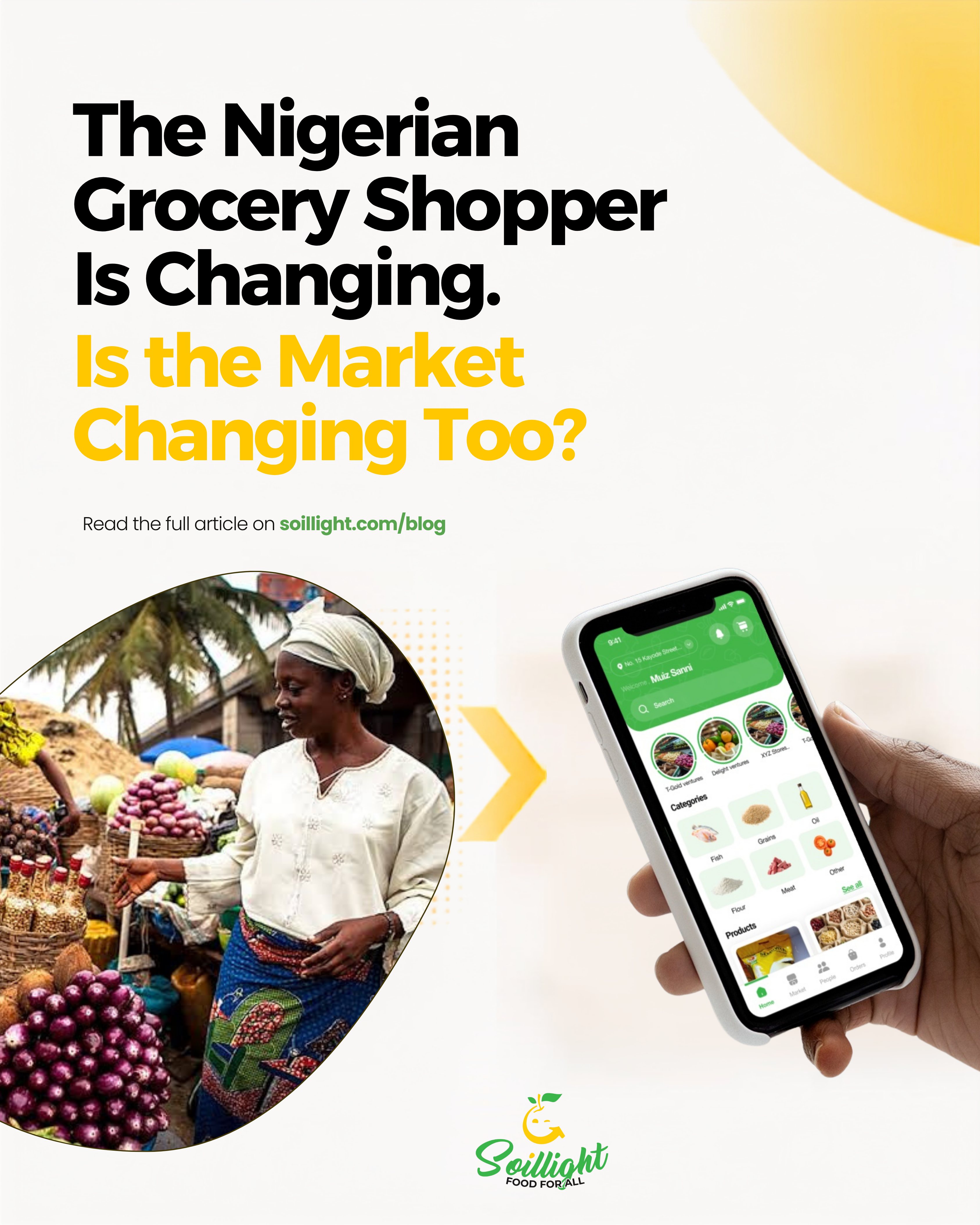
The Nigerian grocery shopper of 2026 doesn't look like the shopper of ten years ago. She's busier. She's more connected. She expects more not because she's less loyal to tradition, but because her life simply runs differently now. That shift in expectation is exactly why we built Soillight around the sellers she already trusts, not around replacing them.
The question worth asking isn't whether the shopper has changed. That much is obvious. The real question is: is the market keeping up?
How the shopper has changed
- She's working longer, harder, and later. More Nigerians especially in cities are juggling full-time jobs, side hustles, and family responsibilities, leaving less room for a leisurely trip to Bodija or Ketu.
- She's mobile-first. Smartphones now account for over 80% of online orders in Nigeria, and social platforms have become genuine checkout venues, not just places to browse.
- She compares experiences, not just prices. A shopper who can track a ride on a map or a delivery in real time starts to expect that same visibility from her grocery run — something a physical market, by nature, can't offer.
- She values her time differently. Time has become a currency people guard more carefully, and shopping habits are one of the first places that shows up.
Has the market changed with her?
In some ways, yes. More traders at markets like Mile 12 and Oyingbo now take transfers instead of insisting on cash. Some sellers have built loyal customer bases on WhatsApp, taking orders directly from regulars. Nigeria's social commerce transaction value alone is projected to nearly double from about $2.04 billion in 2025 to $3.96 billion by 2030; proof that sellers are already meeting shoppers where they are. Markets have always been adaptive; that's part of what's kept them alive for generations.
But structurally, the market experience itself; the travel, the crowd, the unpredictability of finding what you need hasn't changed much at all. And that gap, between a shopper who has changed and a system that mostly hasn't, is exactly where new solutions are being born.
Why this gap matters
When the way people live changes faster than the systems built to serve them, something has to give. Sometimes that means the system adapts. Sometimes it means people start looking elsewhere. For grocery shopping, we're watching both happen at once; traditional markets evolving where they can, and new digital options growing to meet the parts they can't reach.
Soillight exists in that gap- not to erase the market, but to let today's shopper buy directly from real market sellers, follow their stories, and shop the way she actually lives now.
Do you think the market is evolving fast enough for how Nigerians live today or is it falling behind? Meet the market sellers already on Soillight and shop with them without leaving your street.
Comments (0)
No comments yet.